Strip vs. Downtown vs. Summerlin High-Rises: How to Choose
Updated · By the Las Vegas Luxury Towers team
Las Vegas high-rise living isn’t one market — it’s three distinct ones. The Strip corridor, Downtown, and the west side near Summerlin each offer a genuinely different daily life, and buyers who choose by photos alone often end up in the wrong one. Here’s how the three compare on the things that matter.
The Strip corridor: the icon
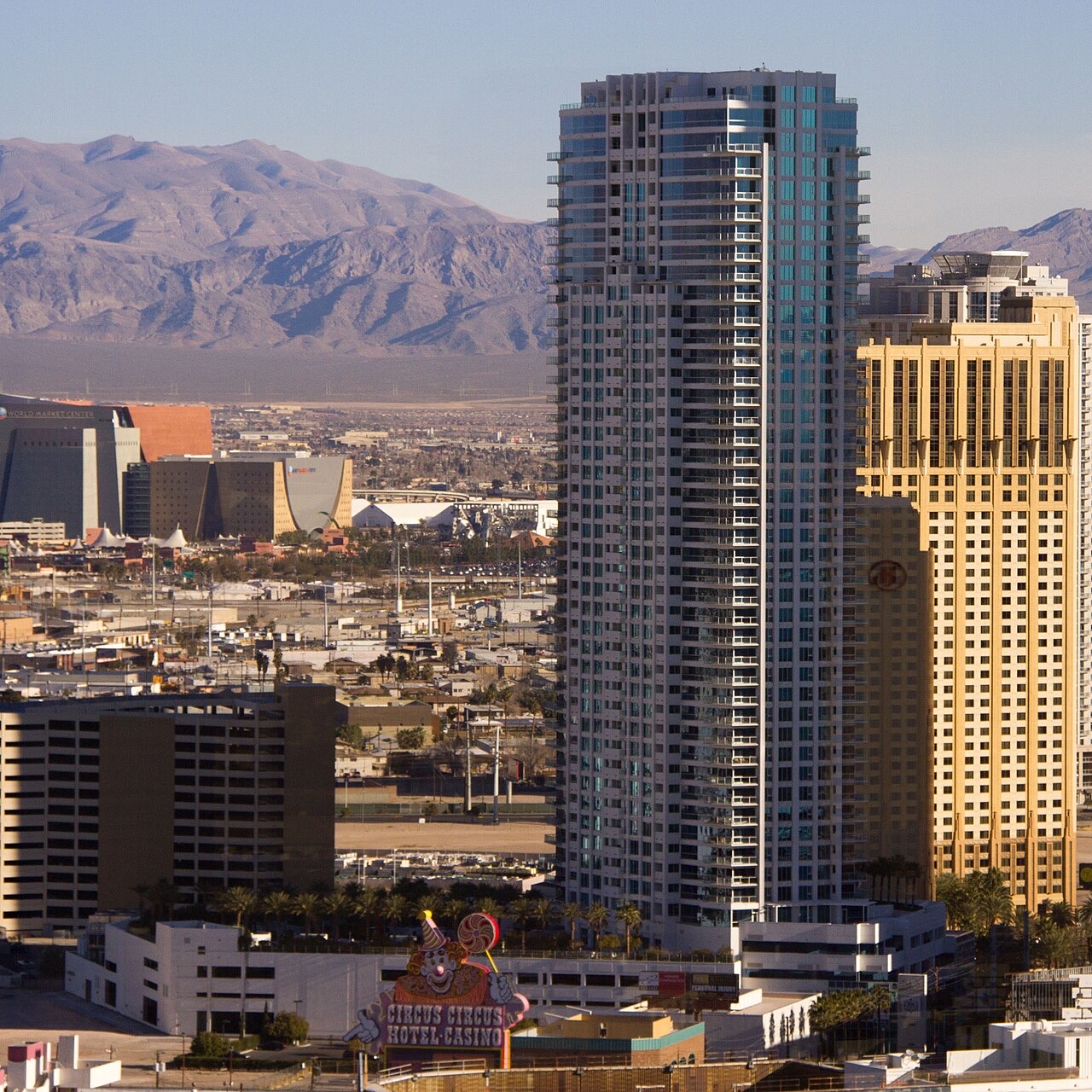
Towers on or beside Las Vegas Boulevard — Veer Towers and Vdara at CityCenter, Sky Las Vegas and Allure at the north end, The Signature at MGM Grand to the south, and The Martin and Panorama Towers just west of the corridor — put you inside the postcard.
What it’s like to live there. Restaurants, shows, and resort amenities are minutes away, and many buildings connect directly to resort campuses. Views are the headline: Strip lights on one side, mountain sunsets on the other. The trade-off is that you live in a tourist economy — traffic on the Boulevard, event-weekend congestion, and a neighborhood built for visitors rather than errands. Grocery runs mean driving.
Who it suits. Second-home owners who want the full Vegas experience when they’re in town; professionals who work in the resort corridor; buyers for whom the view is the point.
Governance note. Most of the Strip lies in unincorporated Clark County, not the City of Las Vegas. County rules — including its restrictive short-term rental licensing regime — apply there, and most residential towers prohibit short-term rentals in their CC&Rs regardless.
Downtown: character and walkability
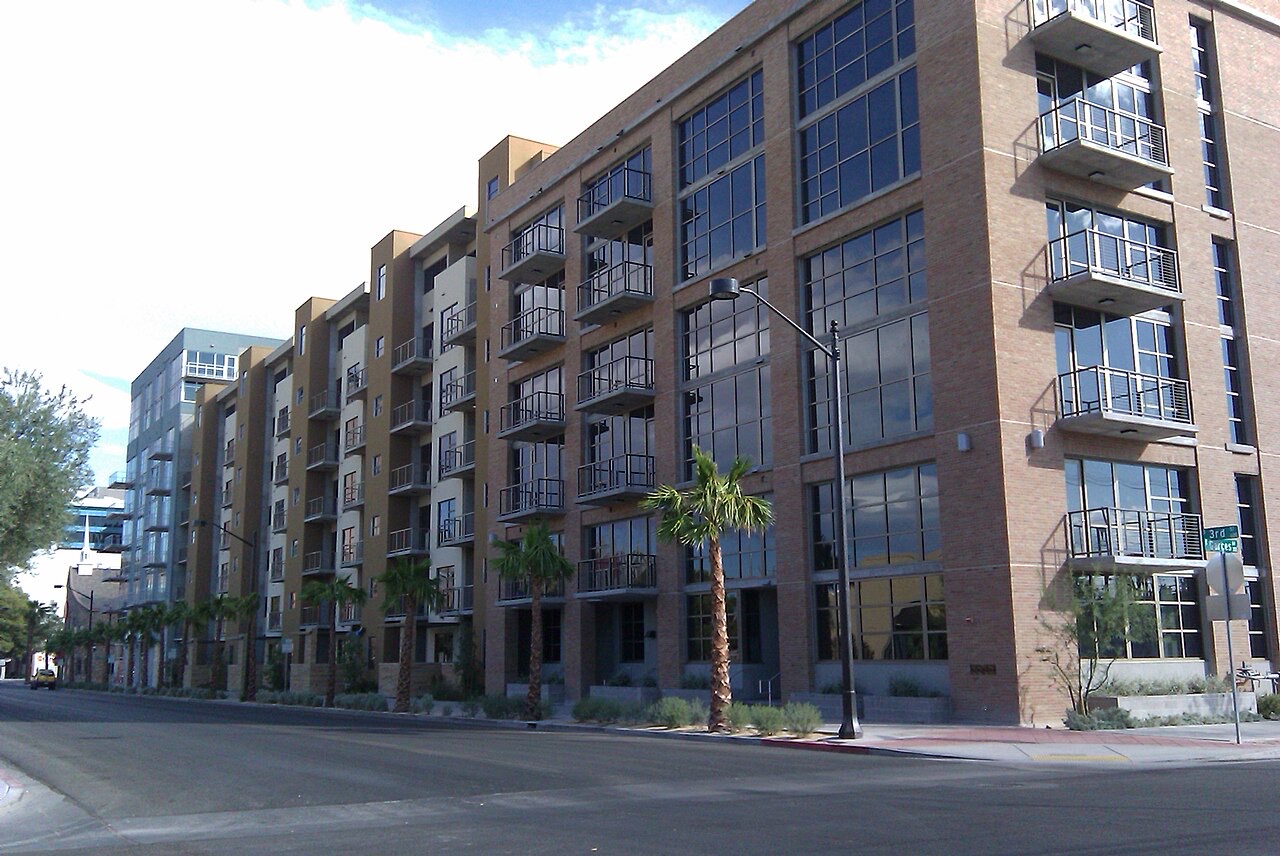
Downtown’s high-rise cluster — Juhl, The Ogden, Soho Lofts, Newport Lofts — grew out of the neighborhood’s revival around Fremont East and the Arts District.
What it’s like to live there. This is the most genuinely urban, walkable life Las Vegas offers. Coffee shops, galleries, independent restaurants, and First Friday are at street level rather than behind a resort’s porte-cochère. The buildings themselves skew loft-style and characterful — exposed concrete at Soho Lofts and Newport Lofts, flexible floor plans at Juhl. Price per square foot generally runs below the Strip corridor, making Downtown the value play among the three areas. The trade-offs: fewer full-service amenities than the marquee Strip towers, and a neighborhood still mid-evolution, block by block.
Who it suits. Buyers who want a real neighborhood over a resort; creatives and remote workers; first-time high-rise buyers watching budget; anyone allergic to tourist crowds but not to city life.
Governance note. Downtown sits inside City of Las Vegas limits, which runs its own short-term rental licensing program — separate from Clark County’s. Building rules still control first: verify with the HOA before assuming anything about rentals.
The west side and Summerlin: quiet luxury
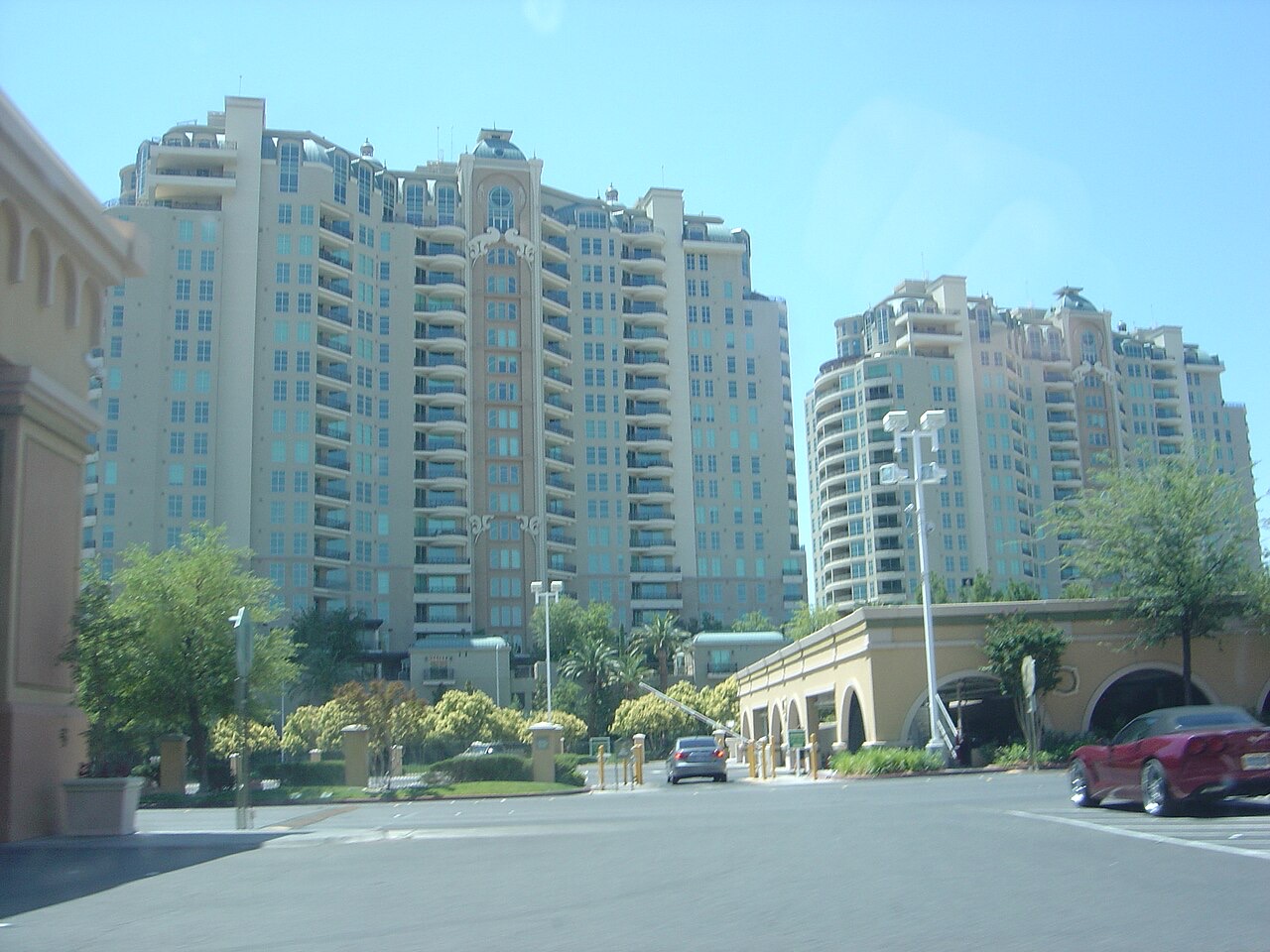
The west valley offers a smaller set of towers, headlined by One Queensridge Place near the Summerlin border — widely considered among the most luxurious residential buildings in the city — with Palms Place a bit closer in and Regency Towers representing the classic era near the old country-club core.
What it’s like to live there. This is high-rise living organized around residents rather than tourism: golf courses, Red Rock Canyon twenty minutes away, top-rated schools and everyday shopping nearby, and dramatically quieter streets. Views face the Strip skyline from a distance — many owners prefer seeing the lights on the horizon to living beneath them.
Who it suits. Full-time residents, families, retirees, and anyone who wants luxury finishes and building services without a tourist corridor outside the lobby.
How they compare at a glance
- Energy: Strip is highest, Downtown is urban-local, west side is calmest
- Walkability: Downtown wins clearly; the Strip is walkable to resorts but not for errands; the west side is car-first
- Price per square foot: Strip corridor generally highest, Downtown generally the entry point, west-side luxury buildings command premium prices for premium product
- Buyer pool at resale: Strip towers draw national and international buyers; Downtown and west-side buildings lean more on local and relocating demand
- Everyday convenience: west side first, Downtown second, Strip last
Three questions that settle it
- How many nights a year will you sleep there? Occasional use favors the Strip (the spectacle stays fun). Full-time living usually favors the west side or Downtown, where daily logistics are easier.
- What does Saturday look like? If the answer is dinner and a show, buy the corridor. If it’s a farmers market and a gallery walk, buy Downtown. If it’s golf or Red Rock, go west.
- Are you buying the view or the neighborhood? Strip towers sell the view; Downtown and Summerlin-area buildings sell the life around them.
There is no wrong answer — only a wrong match. Spend a weekend in each area before you commit, including a weekday morning, and the decision usually makes itself.
Frequently Asked Questions
Which Las Vegas high-rise area is best for full-time living?
Many full-time residents prefer Summerlin-area or off-Strip towers for quiet and everyday convenience, though plenty live happily on or near the Strip. It depends on your tolerance for tourist energy.
Are Downtown Las Vegas condos cheaper than Strip condos?
Generally yes — Downtown towers like Juhl and The Ogden tend to offer lower price points per square foot than comparable Strip-corridor buildings, though prices vary by unit and view.
Is the Las Vegas Strip in the City of Las Vegas?
No. Most of the Strip sits in unincorporated Clark County, while Downtown is inside city limits. That distinction affects which government's rules — including short-term rental licensing — apply.
Do Summerlin-area high-rises have Strip views?
Some do. One Queensridge Place sits far west with panoramic valley views that include the Strip skyline in the distance, a different experience from being inside the corridor.
Which area holds value best?
No area wins in all cycles. Strip-corridor towers draw the deepest national and international buyer pool, while Downtown and west-side buildings lean on local demand. Buy the location that fits how you'll actually use the home.